

MPPT Solar Charge Controller Manual: A Comprehensive Guide
This manual details efficient solar energy harnessing, utilizing Maximum Power Point Tracking (MPPT) controllers for optimal battery charging and system performance.
MPPT, or Maximum Power Point Tracking, represents a significant advancement in solar charging technology. Traditional charge controllers simply connect solar panels directly to batteries, often missing the potential for maximized energy transfer. MPPT controllers, however, actively seek the optimal voltage and current combination from the solar array to deliver the most power possible.
This is achieved by constantly adjusting the operating point of the solar panels. Think of it like a car’s transmission – it varies the ratio between speed and torque. Similarly, MPPT varies the voltage and current to maximize power delivery, ensuring efficient battery charging even under varying sunlight conditions. This technology is crucial for maximizing the return on investment in solar energy systems;
What is an MPPT Charge Controller?
An MPPT (Maximum Power Point Tracking) charge controller is a sophisticated device designed to optimize the power transfer from solar panels to batteries. Unlike traditional PWM (Pulse Width Modulation) controllers, MPPT controllers don’t simply limit the current; they actively find the point where the solar panels produce the most power.
This is done by converting excess voltage from the panels into current, or vice versa, to match the battery’s charging requirements. Essentially, it acts as a highly efficient “transmission” for solar energy. MPPT controllers are the most efficient option available for controlling the charge flowing into your battery, maximizing energy harvest.

How MPPT Controllers Differ from PWM Controllers
PWM (Pulse Width Modulation) controllers directly connect solar panels to batteries, offering no benefit from the panel’s potential beyond a certain voltage. They essentially act as a switch, rapidly connecting and disconnecting the panels.
MPPT controllers, however, are far more intelligent. They actively track the maximum power point of the solar panels, converting excess voltage into current to efficiently charge the batteries. This means MPPT controllers can harvest significantly more energy, especially in colder weather or partial shading. They limit their output to prevent overcharging, ensuring battery longevity and system safety.
Understanding Maximum Power Point Tracking (MPPT)

Maximum Power Point Tracking (MPPT) is a sophisticated algorithm that allows solar charge controllers to optimize energy harvest from solar panels. Solar panels have a specific voltage and current combination where they produce maximum power – this is the ‘maximum power point’.
MPPT controllers continuously scan the solar panel’s output and adjust the operating point to stay at this maximum power point, regardless of changing conditions like temperature or shading. This dynamic adjustment ensures the batteries receive the most power possible, maximizing system efficiency and overall performance. It’s akin to a transmission varying gear ratios.
The Core Function of MPPT: Voltage and Current Conversion
MPPT controllers fundamentally transform the voltage and current characteristics of solar panel output to optimally charge batteries. Solar panels often produce a higher voltage than batteries require for efficient charging. The MPPT controller steps down this higher voltage while simultaneously increasing the current.
This conversion process ensures the battery receives power at its ideal voltage and current levels, maximizing charging efficiency. Traditional controllers simply deliver the panel’s current directly, missing potential gains. MPPT dynamically adjusts this ratio, delivering maximum power regardless of battery state.
MPPT as a “Transmission” for Solar Energy
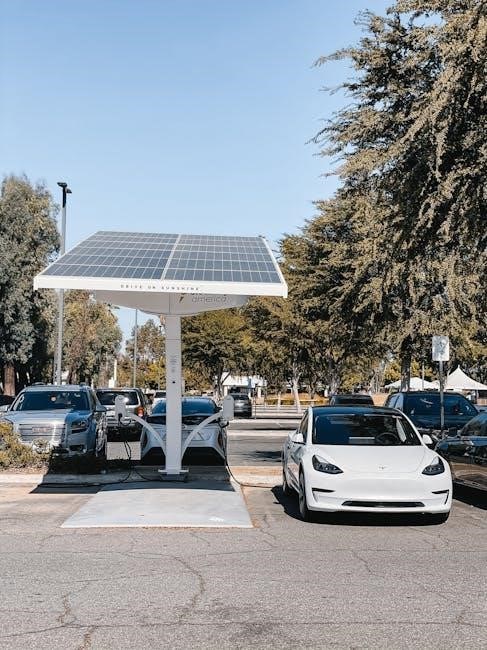
Consider an MPPT controller as the “transmission” within your solar energy system, analogous to a vehicle’s gearbox. Just as a transmission varies the relationship between engine speed and wheel torque, an MPPT controller adjusts the voltage and current delivered to the battery.
At lower battery states, the MPPT prioritizes current, maximizing the charge rate. As the battery nears full capacity, it shifts to manage voltage, preventing overcharging. This dynamic adjustment ensures optimal power transfer, mirroring how a transmission adapts to changing driving conditions.
Benefits of Using an MPPT Solar Charge Controller
MPPT controllers offer significant advantages over traditional PWM controllers, primarily through increased energy harvest. They efficiently utilize the full potential of solar panels, extracting maximum power even under suboptimal conditions like partial shading or low light.
This translates to improved battery charging efficiency, meaning more energy is stored for later use. Furthermore, MPPT controllers provide greater flexibility in system design, allowing for combinations of panel voltages and battery voltages that wouldn’t be possible with PWM technology. They also actively limit output to prevent overcharging.
Increased Energy Harvest
MPPT controllers excel at maximizing energy capture from solar panels, unlike traditional controllers that simply transfer current directly to the battery, ignoring potential gains. They continuously track the maximum power point – the optimal voltage and current combination – where the panels deliver the most power.
This dynamic tracking ensures higher yields, especially in challenging conditions like partial shading or fluctuating sunlight. By adapting the voltage and current ratio, similar to a car’s transmission adjusting speed and torque, MPPT controllers optimize performance, delivering significantly more usable energy to the battery.
Improved Battery Charging Efficiency
MPPT controllers significantly boost battery charging efficiency by intelligently managing the power flow from solar panels. They don’t just deliver power; they regulate it, adjusting to the battery’s specific charging needs and voltage requirements. This prevents energy waste and ensures optimal charging rates.
During initial charging stages, the MPPT controller dictates the power level, maximizing current delivery. As the battery nears full charge, the controller shifts control to the battery itself, reducing power draw to prevent overcharging and prolong battery life. This precise control translates to faster, more complete charging cycles.
Flexibility in System Design
MPPT controllers offer remarkable flexibility when designing solar power systems. Unlike PWM controllers that require strict panel-to-battery voltage matching, MPPT controllers can efficiently utilize higher voltage solar panel arrays. This allows for longer wire runs between panels and the controller, reducing voltage drop and expanding installation options.
This adaptability is crucial for larger systems or installations where panels aren’t located directly adjacent to the batteries. MPPT’s voltage and current conversion capabilities effectively act as a “transmission,” optimizing power transfer regardless of panel and battery voltage differences, maximizing system potential.
MPPT Controller Operation: Stages of Charging
MPPT controllers employ multi-stage charging to optimize battery health and lifespan. Initially, the MPPT controller dictates the power level, adjusting current delivery based on battery voltage requirements – higher voltage means reduced current for the same power.
As charging progresses, control shifts to the battery itself. The battery’s charge control then dictates the power level, reducing power drawn from the solar panels. This ensures efficient and safe charging, preventing overcharge while maximizing energy harvest throughout the entire charging cycle.
Initial Charging Stage: MPPT Control of Power Level
During the initial charging phase, the MPPT controller actively manages the power level delivered to the battery. It dynamically adjusts the current based on the battery’s voltage, ensuring optimal power transfer from the solar panels.
A higher charge voltage necessitates a reduction in current to maintain consistent power input. The controller functions like a transmission, varying the voltage and current ratio to maximize energy delivery. This stage prioritizes quickly bringing the battery up to a usable voltage level, efficiently utilizing available solar energy.
Later Charging Stages: Battery Control of Power Level
As the battery approaches full charge, control shifts from the MPPT controller to the battery itself. The battery’s charging requirements now dictate the power level drawn from the solar panels, rather than the controller maximizing power transfer.
Consequently, the amount of power harvested from the solar array decreases as the battery nears its fully charged state. This prevents overcharging and ensures battery longevity. The MPPT continues to monitor, but now prioritizes adhering to the battery’s specific charging profile, optimizing for safety and lifespan.
Key Features to Look for in an MPPT Controller
Selecting the right MPPT controller requires careful consideration of several key features. Voltage and current ratings must align with your solar panel array and battery bank specifications. Battery compatibility is crucial – ensure the controller supports your battery type (lead-acid, lithium-ion, etc.).
Robust protection features are essential, including overcharge protection, reverse polarity protection, and short-circuit protection. Look for controllers that efficiently limit output to prevent battery damage. Prioritize models with clear displays and user-friendly interfaces for easy monitoring and adjustments.

Voltage and Current Ratings
Understanding voltage and current ratings is paramount for safe and efficient system operation. MPPT controllers have maximum input voltage (Voc) limits from your solar panels; exceeding this can damage the controller. Similarly, a maximum power point tracking (MPPT) controller’s current rating dictates the maximum current it can handle from the array.
Ensure these ratings align with your panel’s specifications, accounting for temperature variations. The controller’s output voltage must match your battery bank’s voltage (12V, 24V, 48V). Proper matching prevents undercharging or overcharging, maximizing battery lifespan and system performance.
Battery Compatibility
Selecting a controller compatible with your battery type is crucial. MPPT controllers support various chemistries – lead-acid (flooded, AGM, gel), lithium-ion, and others. Incorrect settings can severely damage batteries and void warranties. Verify the controller’s specifications clearly state compatibility with your chosen battery type.
Adjust charging profiles accordingly; different batteries require unique voltage and current parameters. Lithium batteries, for example, need specific charging algorithms to prevent damage. Proper configuration ensures optimal charging, extending battery life and maximizing system efficiency. Always consult battery manufacturer guidelines.
Protection Features (Overcharge, Reverse Polarity, etc.)
Robust protection is paramount for system longevity and safety. MPPT controllers incorporate multiple safeguards, including overcharge protection preventing battery damage from excessive voltage. Reverse polarity protection shields against incorrect wiring, a common installation error. Short circuit protection immediately cuts off current during faults.
Over-temperature protection safeguards the controller itself from overheating, while overload protection prevents damage from excessive power draw. These features minimize risks, ensuring reliable operation and preventing costly repairs. Confirm the controller offers comprehensive protection aligned with your system’s needs.
Connecting and Installing an MPPT Charge Controller
Proper installation is crucial for optimal performance and safety. Begin by carefully reviewing the controller’s wiring diagram, ensuring correct connections between solar panels, batteries, and the controller itself. Use appropriately sized wiring to minimize voltage drop and prevent overheating. Mount the controller in a well-ventilated, dry location, protected from direct sunlight and moisture.

Always disconnect the battery before making any connections. Double-check polarity before connecting the solar panels and battery to avoid damage. Follow best practices for cable routing and securing connections.
Wiring Diagrams and Best Practices
Refer to the controller’s specific wiring diagram for accurate connection guidance; variations exist between models. Generally, connect solar panels to the designated PV input terminals, observing correct polarity (+/-). Connect the battery to the battery terminals, again ensuring correct polarity. Use a fuse or circuit breaker on both the solar panel and battery connections for safety.
Employ short, thick gauge wires to minimize voltage drop. Secure all connections tightly to prevent arcing and ensure reliable operation. Avoid running DC wires alongside AC wires to prevent interference.
Safety Precautions During Installation
Always disconnect the battery before working on the wiring to prevent short circuits and electrical shock. Wear appropriate personal protective equipment (PPE), including insulated gloves and eye protection. Ensure the installation location is dry and well-ventilated to prevent overheating and corrosion.

Never work on the system during inclement weather, such as thunderstorms. Double-check all connections for correct polarity before energizing the system. Follow local electrical codes and regulations for safe installation practices.
Troubleshooting Common MPPT Controller Issues
If there’s no charging indication, verify battery connections, solar panel input, and controller settings. Low charging current may indicate insufficient sunlight, incorrect panel angle, or wiring issues – check for loose connections. Controller error codes require referencing the manual for specific meanings and solutions.
Inspect fuses and breakers for any tripped circuits. Ensure the battery is compatible with the controller’s voltage settings. If problems persist, consult a qualified solar technician for assistance and avoid attempting complex repairs yourself.
No Charging Indication
A lack of charging indication is a common issue. First, verify all wiring connections between the solar panels, controller, and battery – ensure they are secure and corrosion-free. Check the battery voltage; it must be within the controller’s acceptable range. Confirm the solar panel is producing voltage under sunlight using a multimeter.
Inspect the controller’s fuse and replace if blown. Ensure the controller’s settings are correctly configured for your battery type. If the problem persists, consult the controller’s manual for specific troubleshooting steps or contact technical support.
Low Charging Current
Experiencing low charging current requires systematic investigation. Begin by checking for shading on the solar panels, as even partial shading significantly reduces output. Verify the panel voltage and current are within specifications under optimal sunlight conditions using a multimeter. Inspect the wiring for any resistance – loose connections or undersized wires can cause voltage drop.
Confirm the battery is not already fully charged, as the controller will reduce current in this state. Ensure the controller’s settings match your battery’s charging profile. If issues remain, review the controller’s manual for advanced troubleshooting or seek expert assistance.
Controller Error Codes and Their Meanings
MPPT controllers utilize error codes to diagnose issues. Consult your specific controller’s manual for a complete list, as codes vary by manufacturer. Common errors include “PV Overvoltage” indicating excessive panel voltage, potentially due to incorrect wiring or panel mismatch. “Battery Overcharge” signals a problem with battery settings or controller functionality.
“Reverse Polarity” indicates incorrect wiring – immediately correct this to prevent damage. “Load Disconnect” may signify overload or low battery voltage. Record the error code and refer to the manual’s troubleshooting section before attempting repairs, ensuring safety and proper diagnosis.
Maintaining Your MPPT Solar Charge Controller
Regular maintenance ensures optimal performance and longevity. Perform visual inspections monthly, checking for loose connections, corrosion, and damage to wiring. Keep the controller clean, removing dust and debris with a soft, dry cloth – avoid liquids. Ensure adequate ventilation to prevent overheating, especially in enclosed spaces.
Check battery terminals for corrosion and clean as needed. If your controller supports firmware updates, periodically check the manufacturer’s website for available upgrades to enhance functionality and address potential bugs. Document all maintenance activities for future reference.
Regular Inspections
Consistent inspections are crucial for identifying potential issues early. Monthly checks should focus on wiring connections – ensure they are tight and free from corrosion. Inspect the controller’s housing for any physical damage, cracks, or signs of overheating. Verify proper ventilation around the unit, confirming airflow isn’t obstructed.
Monitor the controller’s display for any error codes or unusual readings. Check battery terminals for corrosion and clean them if necessary. Document inspection dates and findings to track performance trends and identify recurring problems.
Cleaning and Environmental Considerations
Maintaining a clean operating environment extends the controller’s lifespan. Regularly dust the controller’s exterior with a soft, dry cloth – avoid liquids. Ensure adequate ventilation to prevent overheating, especially in enclosed spaces. Protect the controller from direct sunlight and rain; install it in a shaded, weatherproof enclosure.

Consider the ambient temperature; extreme heat or cold can affect performance. Avoid locations with high humidity or corrosive substances. Inspect for pest intrusion, as insects can damage wiring.
Firmware Updates (if applicable)
Check the manufacturer’s website periodically for firmware updates. These updates can improve performance, add features, or fix bugs. Download the latest firmware version and follow the provided instructions carefully. Typically, updates involve connecting the controller to a computer via USB and using dedicated software.
Back up your current controller settings before updating, if possible. Ensure a stable power supply during the update process to prevent data corruption. Incorrectly performed updates can render the controller unusable; proceed with caution and follow all guidelines.